
Red Flags It's Time to Fire Your Property Manager
Wondering if it's time to switch property managers? Learn the real red flags vs. a bad month - plus how Omaha owners can evaluate a change.

Last Updated: September 19, 2026
Quick Answer
Signs it's time to switch property managers include consistently poor communication, unclear or declining financial reporting, static pricing that never adjusts to demand, falling guest reviews, reactive rather than proactive maintenance, and a manager who can't explain why performance is changing. One bad month rarely means bad management - a repeated pattern across several of these areas usually does.
Introduction
Your property manager should make owning a rental easier - not leave you guessing why bookings dropped, where your revenue went, or whether guests are actually being taken care of. If you've found yourself checking the booking calendar more than your manager does, it may be time to take a closer look at whether the relationship is still working.
This guide walks Omaha, Nebraska property owners through the real warning signs of underperforming management, how to tell a rough month from a genuine pattern, and what to do next if you decide it's time to make a change.
Table of Contents
- Why Switching Property Managers Is a Business Decision
- 10 Red Flags It's Time to Reconsider Your Property Manager
- Bad Month or Bad Management? How to Tell the Difference
- What a Professional Property Manager Should Be Tracking
- Questions to Ask Your Current Property Manager Before You Switch
- How to Evaluate a New Property Manager
- How to Switch Property Managers Without Disrupting Your Property
- Why Omaha Property Owners Need Local Management Insight
- Switching to Roam Properties Management
- Is It Time to Switch Property Managers?
- FAQ
Why Switching Property Managers Is a Business Decision
A rental property, especially one operating as a short-term or vacation rental, is a business - and your property manager runs day-to-day operations of that business on your behalf. When management underperforms, the effects aren't limited to a single bad month:
- Revenue is directly shaped by pricing strategy, listing quality, and booking management.
- Guest experience determines reviews, repeat bookings, and long-term listing ranking on platforms like Airbnb.
- Property condition depends on how quickly and proactively maintenance issues are caught and resolved.
- Owner workload should stay low with competent management - if you're chasing your manager for basic answers, that workload has quietly shifted back to you.
- Financial visibility - knowing exactly what you earned, what you paid, and why - is a baseline expectation, not a bonus feature.
Switching managers is disruptive and shouldn't be done lightly. But staying with underperforming management has a cost too - usually a quieter, more expensive one, paid in lost bookings and declining property value over time.
10 Red Flags It's Time to Reconsider Your Property Manager
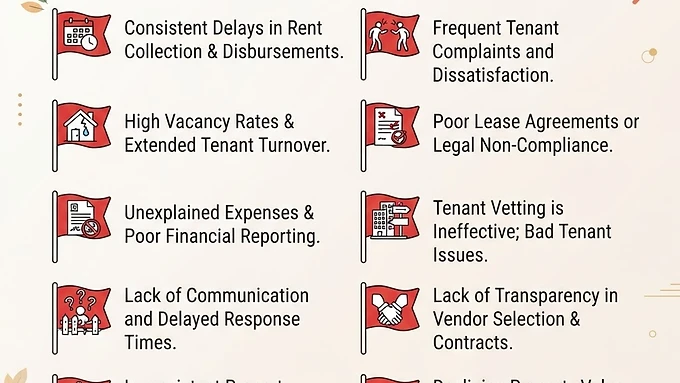 Infographic listing 10 red flags of an underperforming property manager
1. Your Property Manager Is Difficult to Reach
Why it matters: Slow response times don't just frustrate you - they affect guests too. A manager who's hard to reach for owners is often just as hard to reach for guests mid-stay, which shows up directly in reviews.
What a professional manager should do instead: Respond to owner questions within a clear, stated timeframe and have a defined guest-communication response standard (often measured in minutes to a few hours, not days).
What to check: Look back at your last five messages to your manager. How long did each response take? Was there ever no response at all?
When it's serious: If slow responses are the norm rather than the exception, and it's affecting guest satisfaction or your ability to make timely decisions.
2. You Don't Understand Where Your Revenue Is Going
Why it matters: Owners are entitled to a clear line from gross booking revenue to what actually lands in their account. If fees, deductions, or expenses aren't itemized and explained, you can't evaluate whether the management fee is delivering value.
What a professional manager should do instead: Provide itemized statements showing gross revenue, management fees, operating expenses, and net payout - on a predictable schedule.
What to check: Pull your last two or three payout statements. Can you explain every line item without asking a question?
When it's serious: When you regularly have to request clarification just to understand a basic payout.
3. Your Pricing Never Changes
Why it matters: Short-term rental demand is not flat - it shifts with seasonality, local events, weekday vs. weekend patterns, and competitor pricing. A static nightly rate, regardless of demand, leaves money on the table during high-demand periods and can price you out of bookings during slow ones.
What a professional manager should do instead: Use dynamic, demand-based pricing that adjusts to occupancy trends, local events, and competitive rate positioning - not a rate that's set once and forgotten.
What to check: Compare your nightly rate over the last three months against local event calendars and competitor listings for similar properties.
When it's serious: If your rate hasn't meaningfully changed in months despite obvious demand shifts.
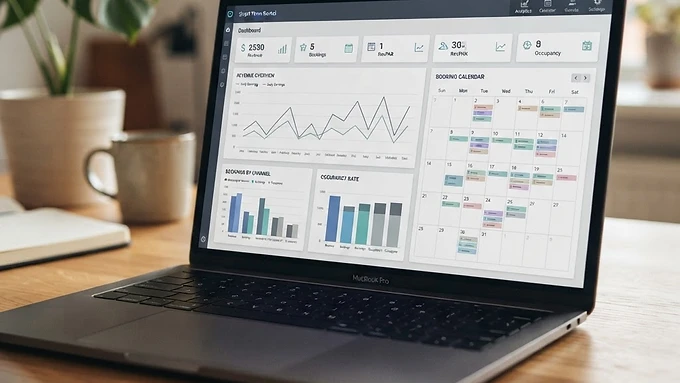 Dynamic pricing and occupancy dashboard for a short-term rental
4. Your Property's Performance Is Declining Without a Clear Explanation
Why it matters: Occupancy, ADR (average daily rate), RevPAR (revenue per available night), and booking pace are the core vital signs of a short-term rental. A decline in any of them isn't automatically a problem - but a decline your manager can't explain is.
What a professional manager should do instead: Track these metrics consistently and proactively flag and explain meaningful shifts before you have to ask.
What to check: Ask directly: "Why has occupancy changed over the last quarter?" A vague or defensive answer is itself a signal.
When it's serious: When declines persist over multiple months with no clear cause and no corrective plan.
5. Your Manager Doesn't Provide Meaningful Reporting
Why it matters: Reporting is how you, as the owner, stay informed without having to manage day-to-day operations yourself.
What a professional manager should do instead: Provide regular reports covering occupancy, revenue, expenses, and notable operational events - not just a payout number with no context.
What to check: Does your current reporting let you understand performance at a glance, or does it require follow-up questions every time?
When it's serious: If reporting is inconsistent, arrives late, or omits key metrics entirely.
6. Maintenance Problems Keep Becoming Your Problem
Why it matters: Reactive maintenance - waiting for something to break, then scrambling - costs more, frustrates guests, and shortens the life of the property's assets. Proactive maintenance and regular inspections catch small issues before they become expensive ones.
What a professional manager should do instead: Run scheduled inspections and address maintenance issues before they affect a guest stay, keeping the owner informed without requiring the owner to coordinate repairs personally.
What to check: In the last six months, how many maintenance issues did you learn about only after a guest complained?
When it's serious: When you're the one fielding maintenance issues or coordinating vendors instead of your manager.
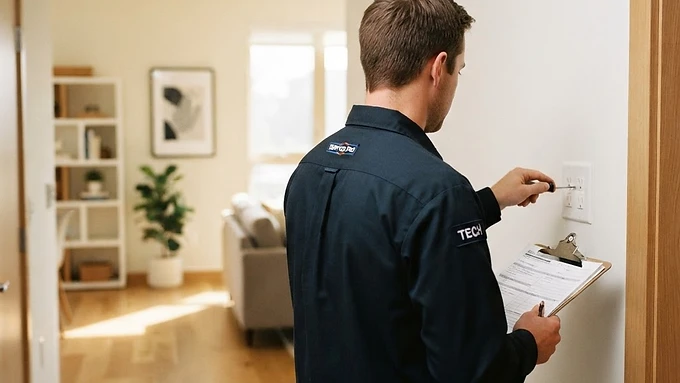 Proactive maintenance inspection at a managed rental property
7. Guest Reviews Are Declining
Why it matters: Reviews are a direct, public reflection of operational quality - cleanliness, communication, accuracy of the listing, and responsiveness during a stay. A downward trend in ratings is rarely random.
What a professional manager should do instead: Monitor review trends, respond professionally to guest feedback, and use recurring complaints to fix underlying operational issues.
What to check: Read your last 10–15 reviews in order. Is there a pattern - cleanliness, communication, accuracy - repeating over time?
When it's serious: When negative themes repeat across multiple reviews rather than appearing as isolated incidents.
 Guest-ready short-term rental interior in Omaha
8. Your Listing Looks the Same While the Market Changes
Why it matters: Listing photography, copy, and amenities should evolve as the market and competing listings do. A stagnant listing loses competitive visibility even if the property itself hasn't changed.
What a professional manager should do instead: Periodically refresh photography, update listing copy and SEO, and reassess amenities and competitive positioning.
What to check: Compare your listing photos and description to when the property was first listed. Has anything meaningfully improved?
When it's serious: If your listing hasn't been touched in over a year despite visible competitor improvements in your market.
9. You Are Doing the Manager's Job Yourself
Why it matters: The entire value proposition of hiring a property manager is reduced owner workload. If you're coordinating cleaners, answering guest questions, or tracking your own financials, you're effectively paying a management fee for work you're still doing.
What a professional manager should do instead: Handle day-to-day operations end-to-end, escalating to you only for decisions that genuinely require owner input.
What to check: Track how many hours you personally spent on property-related tasks last month that should have been your manager's responsibility.
When it's serious: When this becomes a recurring pattern rather than an occasional exception.
10. Your Manager Isn't Giving You a Strategy
Why it matters: Good management is proactive, not just reactive. A manager who only responds to bookings as they happen - without recommending pricing adjustments, marketing improvements, or performance strategy - is managing passively, not actively growing your property's performance.
What a professional manager should do instead: Bring you periodic, property-specific recommendations grounded in current performance data - not generic advice.
What to check: When was the last time your manager proactively suggested a change, rather than you asking for one?
When it's serious: If your manager has never initiated a strategic recommendation without being prompted.
Bad Month or Bad Management? How to Tell the Difference
Not every dip in performance is a management failure. Short-term rental demand is seasonal, market-wide slowdowns happen, and even well-managed properties have quiet months. The distinction isn't the existence of a problem - it's the pattern around it.
Likely a normal fluctuation if:
- It's isolated to one month or a known slow season
- Your manager can clearly explain the cause
- A specific corrective action follows
- Communication throughout remains clear and proactive
Likely a management pattern if:
- Underperformance repeats across multiple months
- Explanations are vague, defensive, or absent
- No corrective action follows, even after you raise it
- Communication is inconsistent on top of the performance issue
- Multiple red flags from the list above are present simultaneously, not just one
A simple diagnostic: one issue is a data point. Three or more recurring issues, over multiple months, with no explanation or correction, is a pattern - and patterns are what justify seriously evaluating a switch.
What a Professional Property Manager Should Be Tracking
| Metric | What It Tells an Owner | Why It Matters |
|---|---|---|
| Occupancy | The percentage of available nights actually booked | Low occupancy signals pricing, marketing, or listing visibility problems |
| ADR (Average Daily Rate) | The average nightly rate achieved across bookings | Reflects whether pricing is capturing what the market will bear |
| RevPAR (Revenue Per Available Night) | Combines occupancy and rate into one performance figure | The clearest single measure of overall booking performance |
| Gross revenue | Total booking income before fees and expenses | The top-line figure all other calculations are based on |
| Net operating income (NOI) | Revenue remaining after operating expenses, before the owner's personal costs | Shows the actual profitability of the property as managed |
| Booking pace | How far in advance bookings are coming in relative to past trends | An early indicator of future occupancy, positive or negative |
| Guest reviews | Aggregate rating and recurring themes in guest feedback | A direct signal of operational and guest-experience quality |
| Maintenance costs | Spend on repairs and upkeep over time | Distinguishes proactive upkeep from costly reactive fixes |
Questions to Ask Your Current Property Manager Before You Switch
- Why has occupancy changed over the last quarter?
- How is nightly pricing determined, and how often is it adjusted?
- What is our current ADR, and how does it compare to similar properties nearby?
- What is our RevPAR trend over the last six months?
- What are our largest recurring operating expenses?
- What specifically are you doing to improve performance this quarter?
- How frequently is the property physically inspected?
- What is the process when a maintenance issue is identified?
- What is your standard response time for owner and guest communication?
- What does our regular owner reporting include?
- How are guest reviews monitored and addressed?
- What is your strategy for the property over the next 90 days?
A manager who answers these clearly and specifically is demonstrating real command of your property. Vague or evasive answers to more than a couple of these questions are themselves a red flag.
How to Evaluate a New Property Manager
Before switching, evaluate any prospective manager - including Roam Properties - against the same standard you're holding your current one to:
- Communication - clear, prompt, and consistent from the first conversation
- Transparency - willing to explain fees, reporting, and performance in plain terms
- Reporting - provides real metrics (occupancy, ADR, RevPAR, NOI), not just a payout number
- Pricing strategy - uses dynamic, demand-based pricing rather than a flat rate
- Revenue management - has a clear approach to growing performance over time, not just maintaining it
- Guest management - demonstrated process for guest communication and review management
- Maintenance - proactive inspection and repair process, not purely reactive
- Marketing - actively maintains and updates listing quality and positioning
- Technology - offers owners real visibility into performance (a dashboard or portal, not just email updates)
- Local market knowledge - understands your specific city's demand patterns, seasonality, and regulatory environment
- Owner support - accessible and responsive to you directly, not just to guests
- Accountability - willing to explain underperformance and correct course, not just report results
How to Switch Property Managers Without Disrupting Your Property
- Review your current management agreement in full before making any decisions.
- Check termination clauses - many management agreements have specific conditions for ending the relationship.
- Understand notice requirements - most agreements require 30, 60, or 90 days' written notice.
- Gather your financial records - past statements, tax documents, and expense history.
- Secure property access - confirm who holds keys, lockbox codes, or smart-lock access, and plan for a clean handoff.
- Transfer listing and account access where applicable, following each platform's transfer process.
- Transfer vendor information - cleaners, maintenance contacts, and any service providers tied to the property.
- Transfer guest and property information appropriately, consistent with your prior manager's privacy obligations and any applicable agreements.
- Coordinate the transition timeline so there's no gap in guest communication or bookings.
- Confirm your new manager's onboarding process - a professional manager should have a defined, documented transition plan.
- Monitor the first 30–90 days closely to confirm the new management relationship is delivering what was promised.
This is general operational guidance, not legal advice. Review your specific management agreement and consult an attorney or qualified professional regarding termination terms before taking action.
Why Omaha Property Owners Need Local Management Insight
Omaha's short-term rental demand isn't uniform across the metro - it's shaped by local drivers that a generic, non-local management approach can miss entirely:
- Business and medical travel into the Omaha metro area drives weekday demand patterns distinct from typical leisure markets
- University-related travel creates seasonal demand tied to the academic calendar
- Local events across the Omaha area can create short, high-demand windows that require active pricing adjustments, not a static rate
- Neighborhood differences - areas like Downtown Omaha, the Old Market, Midtown, Blackstone District, Dundee, Benson, and Aksarben Village each attract somewhat different guest profiles and price points
- Seasonality across the Omaha, Nebraska market affects occupancy and pricing strategy differently than in year-round tourist destinations
- Local regulations governing short-term rentals can vary by city and county, and a manager unfamiliar with Douglas County and Omaha-specific requirements introduces real compliance risk
- Vendor and maintenance relationships built locally tend to produce faster response times than a manager coordinating remotely
A manager without genuine Omaha-specific experience is often applying a generic, one-size-fits-all playbook to a market that doesn't behave like one.
 Short-term rental property in the Omaha, Nebraska area
Switching to Roam Properties Management
If several of the red flags above sound familiar, the next step isn't necessarily switching immediately - it's evaluating your options with the same rigor you'd apply to any other business decision.
Roam Properties works with both property owners and investors across its short-term rental management offering, alongside an Investor Portal built to give owners visibility into their property's performance.
This isn't a pitch to switch on the spot. It's an invitation to compare: hold your current management up against the standard outlined in this article, and if it's consistently falling short, talk to the Roam Properties team about what evaluating your property would actually look like.
[!IMPORTANT] Thinking about switching property managers? Compare your current management approach against what's outlined above, and if you'd like a second perspective on your property's performance, the Roam Properties team is available to talk through what you're seeing.
Is It Time to Switch Property Managers?
Consider switching if several of these are consistently true - not just one:
One or two checked boxes may just reflect a rough patch. Several checked consistently, over time, is a pattern worth acting on.
FAQ
How do I know if I need a new property manager? Look for repeated, unexplained problems across communication, reporting, pricing, maintenance, or guest reviews - rather than a single isolated issue. A pattern across several areas over multiple months is the clearest signal.
When should I switch property managers? Consider switching when your manager can no longer clearly explain your property's performance, when problems repeat despite being raised, or when you find yourself doing management work that should be their responsibility.
What are the biggest property manager red flags? Poor communication, unclear financial reporting, static pricing, declining guest reviews, reactive maintenance, and a lack of proactive strategy are the most common and serious warning signs.
Can I change property managers if I have a contract? Usually yes, but most management agreements include specific termination clauses and notice periods. Review your agreement carefully and consult a professional if the terms are unclear.
How difficult is it to switch property managers? It requires coordination - reviewing your contract, transferring access and vendor information, and timing the handoff carefully - but a well-planned transition shouldn't meaningfully disrupt bookings or guest experience.
How do I fire a property manager? Start by reviewing your management agreement for termination and notice requirements, then provide written notice as required, gather your financial and property records, and coordinate a clean handoff to your new manager.
What should a good property manager provide? Clear and prompt communication, transparent financial reporting, dynamic pricing, proactive maintenance, active guest review management, and periodic strategic recommendations - not just passive booking management.
How do I evaluate a property manager in Omaha? Assess local market knowledge (neighborhood demand patterns, seasonality, and Omaha/Douglas County regulations) alongside the standard fundamentals: communication, transparency, reporting, and pricing strategy.
What should an Airbnb property manager report to owners? At minimum: occupancy, ADR, RevPAR, gross revenue, net operating income, booking pace, guest review trends, and maintenance costs - on a predictable, regular schedule.
How can I compare two property management companies? Ask both the same set of direct questions about pricing strategy, reporting, maintenance process, and communication standards, and compare not just their answers but how specific and confident those answers are.
Is Roam Properties a property management option in Omaha? Yes - Roam Properties provides short-term rental management services for property owners and investors, including in the Omaha, Nebraska market.
How do I switch to Roam Properties management? The first step is a conversation about your current property's performance and what you're looking for in a manager. From there, Roam Properties can walk through what a transition and onboarding process would involve for your specific property.
This article is for informational purposes only and does not constitute legal, financial, tax, or investment advice. Property owners should review their management agreement and consult qualified professionals before changing property management providers.
Ready to Invest?
Explore professionally managed investment opportunities with Roam Properties.
Stay Ahead of the Market
Receive expert Airbnb investing insights, ROI strategies, and market updates directly in your inbox.
Join hundreds of investors receiving market insights.
The Airbnb Hosting Responsibilities Checklist
Next →How to Build an Airbnb Investment Strategy: A Step-by-Step Guide for 2026
Current Investment Opportunities
Browse all
Related Articles
 Airbnb Investing
Airbnb vs Long-Term Rental in Omaha: Better Returns?
Airbnb vs long-term rental in Omaha: compare revenue, expenses, ROI, risk, and regulations to find which strategy fits your investment property.
 Revenue Optimization
What Is RevPAR? Why It Beats Occupancy for STR Investors
RevPAR reveals how efficiently a short-term rental monetizes its available nights. Learn the formula, see a real example, and see why it beats occupancy alone.
 Owner Resources
Airbnb Hosting Responsibilities Checklist | Roam
Getting a booking is the easy part. A complete breakdown of what Airbnb hosting actually involves - listing setup, pricing, guest communication, check-in, cleaning, maintenance, reviews, and financial tracking.