
Owner Resources
The Airbnb Hosting Responsibilities Checklist
Getting a booking is the easy part. Everything that happens before, during, and after that booking is where hosting actually becomes a job.

Getting a booking is the easy part. Everything that happens before, during, and after that booking — the part most "start hosting on Airbnb" guides skip — is where hosting actually becomes a job. This checklist walks through the full lifecycle of Airbnb hosting responsibilities, from before you ever list the property to the ongoing work of keeping it performing well, so you know exactly what you're taking on before you decide how much of it to do yourself.
Quick Answer
What are the responsibilities of an Airbnb host?
Airbnb host responsibilities go far beyond accepting reservations. Hosts are responsible for listing setup and pricing, guest communication at every stage, check-in and check-out logistics, cleaning and restocking between stays, ongoing maintenance, review management, financial tracking, and continuously monitoring performance — all while staying compliant with local regulations.
Table of Contents
The Complete Airbnb Hosting Responsibilities Checklist
Hosting responsibilities fall into a few broad categories that repeat across the life of the property: getting it ready, getting it booked, running the stay, running the business behind it, and keeping it performing well over time. The sections below break each of those down in order.
- 01
Prepare
Regulations, insurance, safety, and access
- 02
List
Photos, copy, amenities, and calendar
- 03
Book
Pricing, guest messaging, and check-in
- 04
Operate
Turnovers, maintenance, and reviews
- 05
Optimize
Reporting, metrics, and performance
Before You List Your Airbnb
Skipping this stage is the single most common reason new hosts run into problems in their first few months — most issues here are preventable with upfront planning.
Airbnb Listing Responsibilities
A listing isn't something you set once and forget. It's an ongoing asset that needs maintenance of its own:
An outdated listing doesn't just underperform — it can actively create guest expectation mismatches that hurt reviews.
Pricing and Revenue Management Responsibilities
Static pricing is one of the most common ways independent hosts leave money on the table. Nightly rates should respond to demand, not sit fixed indefinitely.
Occupancy
- What it means
- Percentage of available nights booked
- Why track it
- Signals whether pricing or visibility needs adjustment
ADR (Average Daily Rate)
- What it means
- Average nightly rate actually achieved
- Why track it
- Shows whether pricing captures real market demand
RevPAR (Revenue Per Available Night)
- What it means
- Combines occupancy and rate into one figure
- Why track it
- The clearest single measure of overall performance
Booking pace
- What it means
- How far ahead bookings are coming in
- Why track it
- An early signal of future occupancy trends
Minimum stay strategy
- What it means
- Required length of stay by date/season
- Why track it
- Balances turnover costs against booking flexibility
| Metric | What It Means | Why Owners Should Track It |
|---|---|---|
| Occupancy | Percentage of available nights booked | Signals whether pricing or visibility needs adjustment |
| ADR (Average Daily Rate) | Average nightly rate actually achieved | Shows whether pricing captures real market demand |
| RevPAR (Revenue Per Available Night) | Combines occupancy and rate into one figure | The clearest single measure of overall performance |
| Booking pace | How far ahead bookings are coming in | An early signal of future occupancy trends |
| Minimum stay strategy | Required length of stay by date/season | Balances turnover costs against booking flexibility |
For a deeper look at how these metrics work together, see Understanding RevPAR and ADR.
Owners responsible for their own pricing need to factor in seasonality, local events, weekday vs. weekend demand, and what comparable listings nearby are charging — ideally reviewed weekly, not set once at launch.
Guest Communication Responsibilities
Communication responsibilities span the entire guest journey, not just the stay itself:
Response time matters at every one of these stages — slow responses during a stay in particular tend to show up directly in review language.
Check-In Responsibilities

A smooth, low-friction check-in sets the tone for the entire stay — it's one of the most reviewed moments in a guest's experience.
During-the-Stay Responsibilities
This is the category most independent hosts underestimate — it requires genuine real-time availability, not just end-of-day check-ins.
Cleaning, Laundry and Restocking

This is recurring, time-sensitive work — a late or missed turnover directly threatens the next guest's check-in experience.
Maintenance and Property Care
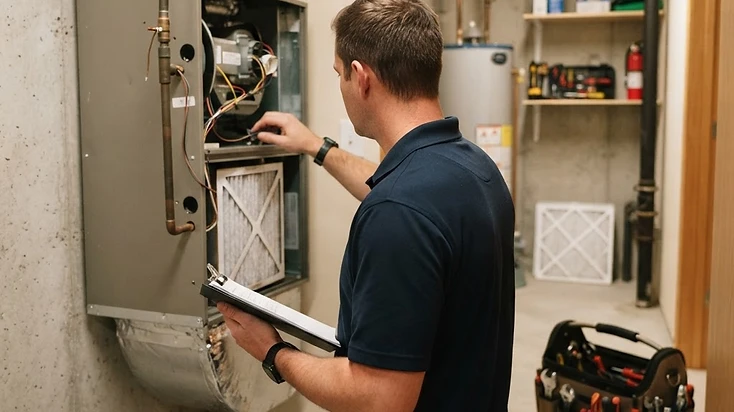
Reactive maintenance — waiting until something breaks — costs more over time than proactive upkeep, and it shows up in guest experience immediately.
Reviews and Guest Experience
Reviews compound — a strong review history improves future booking visibility, while a declining trend can suppress it.
Financial and Administrative Responsibilities
Taxes: Short-term rental income typically has tax implications that vary by situation and location. This article does not provide tax advice — consult a qualified tax professional about your specific obligations.
Ongoing Airbnb Performance Management
Hosting responsibilities don't end once the listing is live. Ongoing monitoring includes:
Revenue expectations vary by market and season — see Is Airbnb Investing Still Profitable in 2026? for a broader look at the numbers behind short-term rental performance.

Omaha Airbnb Hosting Responsibilities
What are the Airbnb hosting requirements in Omaha?
Short-term rental requirements can include local permitting, zoning considerations, and safety standards that vary by city and county. Omaha and Douglas County property owners should verify current short-term rental rules directly with the City of Omaha and Douglas County before listing, since requirements can change.
Beyond compliance, local market dynamics shape how Omaha hosting works in practice:
- Business and medical travel into the Omaha metro area create weekday demand patterns distinct from leisure-driven markets
- University-related travel adds seasonal demand tied to the academic calendar
- Local events across the Omaha area create short windows of high demand that require active pricing attention
- Neighborhood differences — Downtown Omaha, the Old Market, Midtown, Blackstone District, Dundee, Benson, and Aksarben Village each tend to attract somewhat different guest profiles
- Seasonality in the Omaha, Nebraska market affects pricing and occupancy planning differently than in year-round tourist destinations
- Local vendor relationships for cleaning and maintenance tend to produce faster turnaround than coordinating remotely
Regulatory information changes over time — verify current requirements directly with the City of Omaha, Douglas County, and the State of Nebraska before listing or operating a short-term rental.
Airbnb Self-Management vs. Professional Property Management
Guest communication
- Self-managed owner
- Owner handles directly, often real-time
- Professional manager
- Typically handled by a dedicated team
Pricing
- Self-managed owner
- Owner researches and adjusts manually
- Professional manager
- Often managed with dynamic, data-driven tools
Cleaning
- Self-managed owner
- Owner coordinates or performs directly
- Professional manager
- Usually coordinated through established vendor relationships
Maintenance
- Self-managed owner
- Owner arranges repairs as needed
- Professional manager
- Often handled through existing vendor networks
Reviews
- Self-managed owner
- Owner monitors and responds personally
- Professional manager
- Typically monitored as part of ongoing operations
Reporting
- Self-managed owner
- Owner tracks their own numbers
- Professional manager
- Usually provided through regular owner reporting
Vendor coordination
- Self-managed owner
- Owner's responsibility
- Professional manager
- Typically managed on the owner's behalf
Performance monitoring
- Self-managed owner
- Owner's responsibility
- Professional manager
- Usually part of ongoing management
Emergency response
- Self-managed owner
- Owner must be reachable
- Professional manager
- Often covered by a dedicated response process
| Responsibility | Self-Managed Owner | Professional Manager |
|---|---|---|
| Guest communication | Owner handles directly, often real-time | Typically handled by a dedicated team |
| Pricing | Owner researches and adjusts manually | Often managed with dynamic, data-driven tools |
| Cleaning | Owner coordinates or performs directly | Usually coordinated through established vendor relationships |
| Maintenance | Owner arranges repairs as needed | Often handled through existing vendor networks |
| Reviews | Owner monitors and responds personally | Typically monitored as part of ongoing operations |
| Reporting | Owner tracks their own numbers | Usually provided through regular owner reporting |
| Vendor coordination | Owner's responsibility | Typically managed on the owner's behalf |
| Performance monitoring | Owner's responsibility | Usually part of ongoing management |
| Emergency response | Owner must be reachable | Often covered by a dedicated response process |
The right choice depends on owner availability, how far you live from the property, how many properties you manage, how much operational involvement you want, and your hosting experience — there's no universally correct answer.
Which Airbnb Responsibilities Can Owners Outsource?
Commonly outsourced, individually or as part of full-service management:
Outsourcing doesn't have to be all-or-nothing — some owners delegate just cleaning and maintenance while keeping guest communication themselves, for example.
When Does Airbnb Hosting Become Too Much for an Owner?
Common signals, not hard rules:
None of these automatically means you need professional management — they're simply worth noticing if several show up together.
Can Roam Properties Handle These Responsibilities?
Owners who'd rather not manage every item on this checklist themselves often look at professional management as an alternative — sometimes for everything, sometimes just for the operationally heaviest pieces like cleaning, maintenance, and guest communication.
Roam Properties works with both investors and existing property owners on short-term rental management, and operates an Investor Portal intended to give owners visibility into their property's performance.
Short-term rental management covers the operational work of running the property, and the Investor Portal gives owners visibility into how that property is performing. What is included for a specific property is confirmed directly with the team.
If you're weighing how much of this checklist you want to keep doing yourself versus delegate, that's a reasonable starting point for a conversation with a property management team — including Roam Properties.
If you are evaluating a manager, the same signals apply whether you hire locally or nationally — see Red Flags It's Time to Fire Your Property Manager.
Weighing how much of this checklist you want to handle yourself? Explore what professional management with Roam Properties could look like for your property.
Printable Airbnb Hosting Checklist
A condensed version of the responsibilities above, grouped for printing.
Before Listing
- Regulations and HOA rules confirmed
- Insurance verified
- Safety equipment installed
- House rules written
- Access system set up
Listing
- Professional photos
- Accurate title and description
- Pricing strategy set
- Calendar and availability configured
Before Guest Arrival
- Check-in instructions sent
- Wi-Fi and parking info ready
- Property cleaned and inspected
During Stay
- Guest messages monitored
- Maintenance issues addressed promptly
- Emergencies handled
Checkout
- Checkout instructions confirmed
- Damage check completed
Cleaning
- Turnover cleaning completed
- Linens laundered
- Consumables restocked
Maintenance
- Routine inspection scheduled
- Preventative maintenance up to date
Financial
- Revenue and expenses tracked
- Records kept for tax purposes
Performance
- Occupancy, ADR, and RevPAR reviewed
- Review trends monitored
Compliance
- Local regulations re-verified periodically
FAQ
Airbnb hosts are responsible for listing setup and pricing, guest communication at every stage of the booking, check-in and checkout logistics, cleaning and restocking between stays, maintenance, review management, financial tracking, and ongoing performance monitoring.
Daily responsibilities typically include monitoring guest messages, checking the booking calendar, and staying available to handle any issue that comes up during an active stay — even on days without a turnover.
Between guests, hosts typically coordinate turnover cleaning, restock consumables, inspect for damage, and prepare the property for the next check-in.
By default, the host is responsible for ensuring the property is cleaned between stays, whether that's done personally or through a cleaning vendor.
The host is responsible for maintenance unless that responsibility has been delegated to a property manager or maintenance vendor.
Time commitment varies widely based on property size, guest volume, and how much is delegated — but between guest communication, cleaning coordination, and maintenance, it's rarely a fully passive activity for self-managed hosts.
Not typically when self-managed. Hosting involves active, ongoing responsibilities across guest communication, operations, and property care — professional management can reduce hands-on involvement, but doesn't eliminate the underlying work.
Yes. Individual tasks like cleaning or pricing can be outsourced separately, or a full-service property manager can handle the entire operation.
A property manager typically handles some or all of guest communication, pricing, cleaning coordination, maintenance, reporting, and overall performance management on the owner's behalf.
Requirements can include local permitting, zoning, and safety standards that vary by city and county — Omaha and Douglas County owners should verify current rules directly with local authorities before listing.
Managing an Omaha Airbnb involves the same core responsibilities as anywhere else, plus attention to local regulations, neighborhood-specific demand, and Omaha's seasonal and event-driven booking patterns.
This depends on the specific management company and service agreement — ask directly what's included, from guest communication and pricing to maintenance and reporting.
Disclaimer
This guide is for informational purposes only and is not legal, tax, insurance, or financial advice. Airbnb and short-term rental requirements can vary by location and property. Owners should verify current requirements with the appropriate local and state authorities and qualified professionals.
Related Roam Properties Resources
The Complete Guide to Buying a Turnkey Airbnb Through an Investor Portal
How turnkey short-term rental investing works, and what the Roam Investor Portal shows qualified investors.
Read moreIs Airbnb Investing Still Profitable in 2026?
A data-driven look at occupancy, ADR, and cost structure, and where short-term rental investing still works.
Read moreWhat Is RevPAR? Why It Beats Occupancy for STR Investors
How to read RevPAR, ADR, and occupancy together when you review a property’s performance.
Read moreRed Flags It’s Time to Fire Your Property Manager
The warning signs that separate a bad month from underperforming management, and how to evaluate a switch.
Read more