Airbnb vs Long-Term Rental in Omaha: Which Has Better Returns?
Airbnb vs long-term rental in Omaha: compare revenue, expenses, ROI, risk, and regulations to find which strategy fits your investment property.

Quick Answer
Airbnb can produce higher gross revenue than a long-term rental in Omaha when a property sits near strong short-term demand, but it typically requires more active management and carries more variable income. Long-term rentals usually offer steadier cash flow and simpler operations, with a lower revenue ceiling. The better strategy depends on your property's location, operating costs, local regulations, and your own goals - not a citywide rule.
Airbnb vs Long-Term Rental in Omaha at a Glance
| Factor | Airbnb / Short-Term Rental | Long-Term Rental |
|---|---|---|
| Revenue potential | Higher ceiling in strong-demand locations; highly variable by season and event calendar | Lower ceiling; grows gradually with market rent |
| Income predictability | Fluctuates month to month with occupancy and booking pace | Fixed monthly rent for the lease term |
| Management intensity | High - guest communication, turnovers, cleaning coordination, pricing | Low - tenant screening, periodic maintenance, rent collection |
| Operating costs | More line items: cleaning, supplies, furnishing, higher utility load, platform fees | Fewer line items: routine maintenance, sometimes utilities |
| Occupancy/vacancy risk | Night-by-night booking risk; sensitive to seasonality and local events | Vacancy risk tied to tenant turnover and lease cycles, generally less frequent |
| Furnishing requirements | Fully furnished, guest-ready, with ongoing replacement costs | Typically unfurnished or minimally furnished |
| Guest/tenant turnover | Frequent - often multiple times per week | Infrequent - usually once every 12+ months |
| Regulation | Subject to Omaha's short-term rental licensing and tax rules, which are evolving | Subject to Omaha's rental registration and landlord-tenant law |
| Revenue upside | Can exceed long-term rent in the right property/location, but not guaranteed | Capped by prevailing market rent |
| Investor involvement | Active, or dependent on a property manager/co-host | Largely passive after lease-up |
| Best suited for | Investors who can manage actively (or pay for management) and want revenue upside in the right location | Investors who prioritize predictability and lower operational complexity |
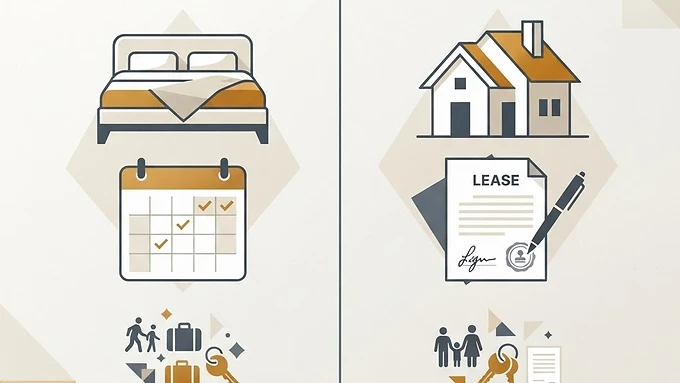 Infographic comparing Airbnb and long-term rental returns, expenses, and risk for Omaha investment properties.
What Is the Difference Between an Airbnb and a Long-Term Rental?
An Airbnb, or short-term rental (STR), is a furnished property booked by guests for nights or weeks at a time through platforms like Airbnb or Vrbo. In Omaha, that guest base includes business travelers, medical visitors, families in town for a wedding or graduation, and fans attending events like the College World Series. Revenue is driven by average daily rate (ADR) and occupancy, and the property functions more like a small hospitality business than a rental.
A long-term rental is leased to a tenant for months or years, typically unfurnished, with rent collected on a fixed monthly schedule. In Omaha, this looks like renting a single-family home, duplex, or apartment unit to a resident who lives and works in the metro. Revenue is driven by the monthly rent a landlord can command in a given neighborhood, minus vacancy between leases.
Both models can work on the same physical property in Omaha, but they carry different operating rhythms, cost structures, and regulatory obligations - which is why they need to be underwritten separately rather than compared on gross revenue alone.
Is Airbnb More Profitable Than Long-Term Rental in Omaha?
Airbnb can generate higher gross revenue in Omaha when a property is well-located for short-term demand, but "more profitable" depends on net cash flow, not gross income. A well-performing Omaha short-term rental can out-earn a comparable long-term lease on a monthly basis. It can also underperform once furnishing, cleaning, higher utility bills, platform fees, and management time are subtracted - especially with the occupancy swings the model is prone to.
Long-term rentals, by contrast, offer a more predictable - though generally lower - monthly income stream, which can make them the higher-return choice for investors who value stability or who don't want to manage a hospitality-style operation. Net returns in either case depend on purchase price, financing, occupancy or vacancy, management costs, and local regulation. That's why Omaha investors should compare both strategies at the property level rather than assume one format wins city-wide.
Publicly available short-term rental data providers illustrate just how much this varies: recent estimates for Omaha put average daily rate anywhere from roughly $116 to $275 and occupancy from roughly 43% to 61%, depending on the provider, data window, and property mix. That spread is a signal in itself - citywide averages are a starting point for research, not a number to underwrite a specific purchase against.
When Can a Long-Term Rental Produce Better Returns in Omaha?
A long-term rental can outperform an Airbnb in Omaha when:
- Predictable rent matters more than peak revenue. A signed lease removes night-to-night booking risk.
- Turnover is low. Fewer move-outs mean less vacancy, less cleaning, and less re-marketing cost.
- Operational complexity is a drawback, not a feature. No guest messaging, no same-day turnovers, no dynamic pricing to manage.
- Furnishing costs would erode returns. Long-term rentals typically don't require furniture, appliances beyond standard fixtures, or ongoing replacement of guest-facing items.
- The property sits in a stable residential neighborhood without the walkability, event proximity, or visitor draw that supports strong nightly bookings.
- Management intensity needs to stay low, particularly for investors who are out of state or managing multiple properties.
For many Omaha rental properties - especially standard single-family homes and apartment units in residential neighborhoods without a specific short-term demand driver nearby - a long-term lease will be the more reliable path to positive cash flow.
How Airbnb Revenue Works in Omaha
 Furnished short-term rental living room in an Omaha investment property.
Short-term rental revenue is built from two inputs:
Average Daily Rate (ADR) × Occupied Nights = Gross Booking Revenue
From gross booking revenue, an investor then subtracts operating costs before arriving at profit:
- Platform/booking fees
- Property management or co-hosting fees
- Cleaning between stays
- Utilities (typically paid by the owner, and higher than a long-term rental due to guest usage)
- Supplies and consumables (toiletries, linens, coffee, etc.)
- Maintenance and repairs
- Furnishing and periodic replacement
- Insurance (often a short-term rental or landlord policy with liability coverage)
- Property taxes
- Mortgage payment
- Local occupancy/lodging taxes and licensing costs
Because ADR and occupancy both move with seasonality, events, and competing supply, Airbnb revenue in Omaha is inherently more variable month to month than long-term rent. Peak periods - such as summer months tied to the College World Series and other warm-weather travel - can outperform slower months significantly, which is part of why providers report Omaha's strongest short-term rental months landing in the May-August window.
How Long-Term Rental Revenue Works in Omaha
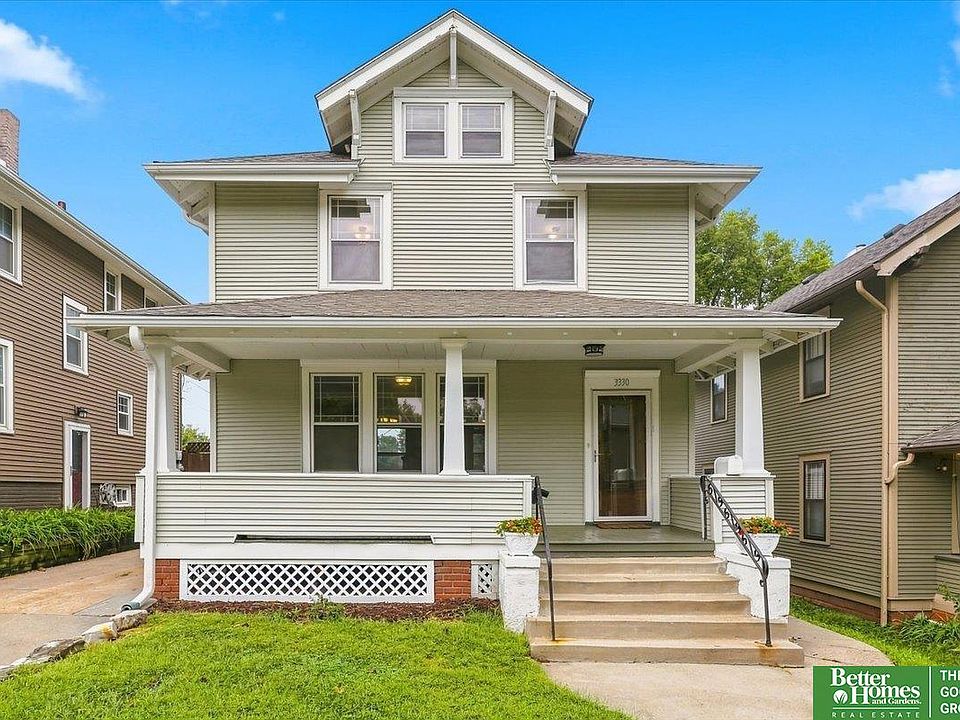
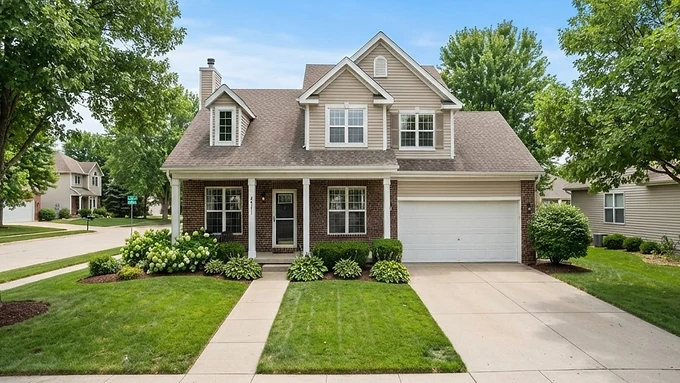 Single-family long-term rental home in an Omaha residential neighborhood.
Long-term rental revenue is more straightforward:
Monthly Rent × Occupied Months = Gross Rental Income
From gross rental income, an investor subtracts:
- Vacancy (time between tenants, plus any concessions)
- Property management fees (if used)
- Maintenance and repairs
- Property taxes
- Insurance
- Utilities (where the owner covers them, which is less common than with an STR)
- Mortgage payment
- Rental property registration or inspection costs
Because rent is typically fixed for a 12-month lease term, revenue is predictable, and the primary risks are vacancy between tenants, tenant-caused damage, and rent growth lagging the broader market.
Airbnb vs Long-Term Rental: Expense Comparison
| Expense category | Airbnb / Short-Term Rental | Long-Term Rental |
|---|---|---|
| Management | Often 15-30%+ of revenue if outsourced, given the operational workload | Typically 8-12% of monthly rent if outsourced |
| Utilities | Usually owner-paid; higher due to guest usage patterns | Often tenant-paid, or lower owner-paid baseline |
| Cleaning | Required after nearly every stay | Only between tenants |
| Furnishing | Full furnishing plus ongoing replacement of worn or damaged items | Minimal to none |
| Maintenance | More frequent wear from guest turnover | Less frequent, tied to tenant care and lease length |
| Supplies | Recurring cost (linens, toiletries, welcome items) | Not applicable |
| Insurance | Often requires a short-term rental or commercial-style policy | Standard landlord policy |
| Taxes | Property tax plus applicable occupancy/lodging tax collection and remittance | Property tax only |
| Platform fees | Airbnb/Vrbo host service fees on each booking | Not applicable |
| Vacancy | Night-by-night booking gaps, especially in shoulder seasons | Gap between lease terms |
| Turnover cost | Cleaning and restocking after nearly every guest | Move-out cleaning, repairs, and re-leasing costs once or twice a year |
Airbnb vs Long-Term Rental: ROI Comparison
Comparing the two strategies requires the same core metrics, applied consistently:
- Net Operating Income (NOI) = Gross revenue - operating expenses (excluding mortgage payments)
- Cash Flow = NOI - debt service (mortgage principal and interest)
- Cash-on-Cash Return = Annual cash flow ÷ total cash invested (down payment, closing costs, furnishing/rehab)
- ROI = Total return (cash flow plus equity growth/appreciation) ÷ total investment, typically measured over a holding period
- RevPAR (short-term rental only) = ADR × occupancy rate, a single metric combining rate and demand
A property can show higher gross revenue as an Airbnb and still produce a lower cash-on-cash return than the same property leased long-term, once management intensity, furnishing, and occupancy volatility are priced in. This is the core distinction Omaha investors need to underwrite for: higher revenue is not the same as higher investment return.
What Makes an Omaha Property Better for Airbnb?
Certain property and location characteristics tend to support stronger short-term demand in Omaha, though none of them guarantee profitability on their own:
- Proximity to downtown Omaha, the Old Market, or the riverfront entertainment corridor
- Walkability to restaurants, event venues, and attractions
- Proximity to CHI Health Center Omaha, Charles Schwab Field, or other event venues
- Proximity to major medical campuses that draw visiting patients, families, and healthcare professionals
- Proximity to universities that draw parents, visiting faculty, and event attendees
- Adequate off-street parking, which is a common guest concern
- Property size and layout suited to groups (multiple bedrooms, separate living space)
- Distinct or well-photographed interior design that supports premium ADR
A property can check several of these boxes and still underperform if local competition is heavy, licensing/registration requirements aren't met, or the operating budget doesn't account for realistic occupancy.
What Makes an Omaha Property Better for Long-Term Rental?
Long-term rental performance tends to track different fundamentals:
- Stable, established residential neighborhoods with consistent tenant demand
- Proximity to employment centers, good schools, and everyday amenities (grocery, transit, parks)
- Property condition and layout that appeals to long-term residents (yard space, garage, storage)
- Neighborhood rent trends that are stable or growing
- Lower turnover history for comparable properties in the area
- A price point that allows for healthy operating margin at prevailing market rent
These fundamentals are less about visitor traffic and more about whether people want to live in the neighborhood long-term.
Which Omaha Areas May Have Different Rental Demand?
 Old Market entertainment district in downtown Omaha.
Rental economics vary by neighborhood and property type across Omaha, and no single area is automatically the "best" for either strategy. Areas commonly discussed in the context of Omaha's short-term and long-term rental markets include:
- Downtown Omaha and the Old Market - dense concentration of restaurants, entertainment, and proximity to CHI Health Center Omaha and Charles Schwab Field, which can support short-term guest demand tied to events and business travel
- Midtown and the Blackstone District - walkable commercial corridors near Creighton University and the medical district
- Dundee - an established, walkable residential neighborhood with a mix of long-term rental demand and some short-term interest
- Benson - a growing arts and dining district with residential rental demand
- Aksarben Village - a mixed-use development near the University of Nebraska Omaha's south campus, with both residential and visitor-oriented uses
- North and South Omaha - largely residential areas where long-term rental fundamentals (employment access, affordability, family housing) tend to be the primary demand driver
- West Omaha - newer residential development with strong long-term rental appeal tied to schools and family housing
Investors should treat this as a starting list for research, not a ranking. Demand for either model depends on the specific block, property condition, and competitive supply - not the neighborhood name alone.
Omaha Airbnb Demand: What Investors Should Analyze
Short-term rental demand in Omaha is influenced by several identifiable drivers:
- Major events, including the NCAA Men's College World Series at Charles Schwab Field, which the NCAA reports has drawn an average of more than 338,000 visitors annually to Omaha
- Conventions and business travel through CHI Health Center Omaha, which is undergoing a voter-approved $200 million expansion aimed at attracting larger convention business
- The Berkshire Hathaway annual shareholder meeting, which draws tens of thousands of attendees to Omaha each May
- Medical travel tied to the University of Nebraska Medical Center and other major hospital systems, which bring in patients, families, and visiting medical professionals
- University-related travel tied to Creighton University and the University of Nebraska Omaha, including move-ins, graduations, and campus visits
- General tourism, with Visit Omaha (the city and Douglas County's official tourism authority) reporting the metro draws over 12 million annual visitors who generate more than $1 billion in visitor spending
- Seasonal patterns, with short-term rental data providers generally showing Omaha's strongest booking months in the late spring through summer window
None of these drivers guarantees strong performance for a specific address - an investor still needs to evaluate distance to the demand driver, competing STR supply, and realistic occupancy.
Omaha Long-Term Rental Demand: What Investors Should Analyze
Long-term rental demand is tied to broader economic and demographic fundamentals:
- Metro population growth. The Omaha metro area surpassed 1 million residents in 2024, growing roughly 3.3% between 2020 and 2024, according to the University of Nebraska Omaha's Center for Public Affairs Research.
- Employment stability. Omaha's economy includes large, stable employers across insurance, finance, healthcare, and logistics, anchored in part by institutions such as the University of Nebraska Medical Center, which reports an annual economic impact of roughly $5.9 billion.
- Rent growth. Average asking rents across Omaha are generally reported in the low-to-mid $1,000s per month as of mid-2026, with recent data from RentCafe (sourced from Yardi Matrix and U.S. Census data) putting the citywide average at $1,338 per month, up about 2.5% year-over-year. Other providers report figures ranging from roughly $1,090 to $1,463 depending on methodology and property mix, which underscores the value of pulling comparable rents for the specific submarket rather than relying on a single citywide number.
- Housing supply and vacancy at the neighborhood level, which affects how quickly a unit re-leases after a tenant moves out
- Tenant profile, including whether the surrounding area attracts long-term residents, families, students, or young professionals
Which Strategy Is More Passive?
Long-term rentals are generally the more passive strategy. Once a tenant is placed, ongoing involvement is limited to rent collection, periodic maintenance, and occasional turnover - especially with a property manager in place. Airbnb operations require ongoing involvement in guest communication, pricing adjustments, cleaning coordination, and turnover logistics, even when a co-host or full-service property manager is handling day-to-day tasks, since owner oversight and cost monitoring typically remain more hands-on.
Which Strategy Has More Risk?
Each model carries a different risk profile:
- Revenue/occupancy risk: Airbnb income can swing significantly month to month based on bookings; long-term rental income is fixed for the lease term but exposed to vacancy risk between leases.
- Regulatory risk: Omaha's short-term rental rules have been actively evolving, including a 2026 proposal to add new registration requirements - this is an area investors need to monitor closely (see the regulations section below). Long-term rentals are subject to Omaha's rental registration and inspection program and standard landlord-tenant law, which is comparatively more settled.
- Tenant/guest risk: Long-term rentals carry tenant-default and eviction-process risk; short-term rentals carry guest-behavior and property-damage risk spread across many more turnovers.
- Maintenance risk: Higher-frequency use in a short-term rental can accelerate wear on furnishings, appliances, and finishes.
- Market risk: Both models are exposed to broader Omaha housing market conditions, interest rates, and financing costs.
- Operating risk: Short-term rentals depend more heavily on active, competent management; a lapse in pricing strategy, guest communication, or turnover quality can directly reduce revenue.
Airbnb vs Long-Term Rental: Which Is Better for a First-Time Omaha Investor?
There isn't a universal answer, but a few practical considerations apply. Long-term rentals generally have a shorter learning curve, fewer moving parts, and lower furnishing costs upfront - which can make them a more approachable entry point for a first-time investor still building underwriting experience. Airbnb can offer stronger upside in the right Omaha location, but it asks more of a first-time owner: accurate revenue forecasting, active or outsourced management, and comfort with month-to-month income variability. Investors new to Omaha real estate should underwrite both models on the specific property before deciding, rather than defaulting to either format based on general reputation.
Which Strategy Is Better for a Hands-Off Investor?
A long-term rental, paired with professional property management, is typically the more hands-off option. Short-term rentals can also be run passively with a full-service manager or co-host, but management fees for STRs are usually a larger share of revenue than long-term rental management fees, which affects net return even when the owner is fully hands-off.
Which Strategy Has Better Cash Flow?
Neither model has inherently better cash flow - it depends on property-level underwriting. A well-located Omaha Airbnb with strong occupancy can out-earn a long-term lease on the same property. A long-term rental with low vacancy and modest expenses can also out-earn an underperforming or over-leveraged short-term rental. The determining factors are purchase price, financing terms, realistic occupancy/vacancy assumptions, and total operating costs - which is why the underwriting framework below matters more than the rental model label.
When Should You Choose Airbnb in Omaha?
Consider a short-term rental strategy when:
- The property is within walking distance or a short drive of downtown, the Old Market, CHI Health Center Omaha, or a hospital/university corridor
- You've pulled comparable short-term rental performance data for the specific submarket, not just citywide averages
- You have a plan for either active management or a vetted local co-host/property manager
- Your underwriting can absorb seasonal occupancy swings without jeopardizing cash flow
- You've confirmed the property complies with current Omaha short-term rental registration, licensing, and tax requirements
- You've budgeted realistically for furnishing, cleaning, and higher utility costs
When Should You Choose a Long-Term Rental in Omaha?
Consider a long-term rental strategy when:
- Predictable monthly income is a higher priority than peak revenue potential
- The property sits in a stable residential neighborhood without a clear short-term demand driver nearby
- You want lower day-to-day operational involvement
- You'd rather avoid furnishing, guest turnover, and short-term rental-specific regulatory obligations
- Comparable long-term rents in the submarket support solid cash flow at your purchase price and financing terms
How to Compare Airbnb vs Long-Term Rental Before Buying an Omaha Property
 Real estate investor comparing Airbnb and long-term rental financials for an Omaha property.
- Estimate realistic Airbnb revenue using comparable listings in the specific submarket - not citywide averages - for ADR and occupancy.
- Estimate realistic long-term rent using comparable active and recently leased units in the same neighborhood.
- Calculate operating expenses for each model separately, including the cost categories outlined above.
- Calculate management costs, whether self-managed (time cost) or outsourced (fee-based).
- Calculate financing costs, including principal, interest, taxes, and insurance (PITI) based on your actual loan terms.
- Calculate NOI for each strategy (gross revenue minus operating expenses, excluding debt service).
- Calculate annual cash flow (NOI minus debt service) for each strategy.
- Calculate cash-on-cash return based on total cash invested, including any furnishing or rehab costs specific to the Airbnb scenario.
- Stress-test your assumptions. Model a lower-occupancy scenario and a rent-flat scenario to see how each strategy holds up.
- Check current Omaha and Douglas County short-term rental regulations before assuming STR is viable for the property (see below).
- Compare risk and management requirements against your own available time, risk tolerance, and investment horizon.
- Choose the strategy - or plan to switch between them later - that best fits your financial goals and operational capacity.
Airbnb vs Long-Term Rental: An Example Omaha Property
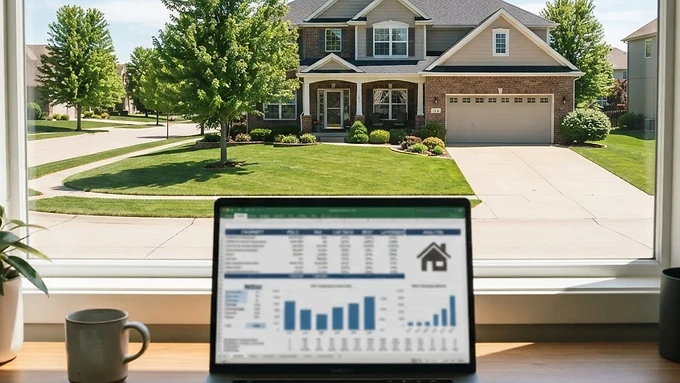 Illustrative Omaha rental property used to demonstrate real estate investment underwriting
Illustrative example - not a market forecast. Figures are hypothetical and intended to demonstrate the underwriting methodology, not to represent guaranteed or typical returns for any specific Omaha property.
Property assumptions:
- Purchase price: $300,000 (in line with recent Omaha average home values)
- Down payment: 25% ($75,000)
- Loan amount: $225,000 at an illustrative 7% interest rate, 30-year term
- Estimated monthly mortgage payment (principal and interest): approximately $1,497
Scenario A: Airbnb
- Assumed ADR: $175 | Assumed occupancy: 50% (≈182 nights/year)
- Gross annual booking revenue: ≈ $31,850
- Estimated annual operating expenses (management, cleaning, utilities, supplies, maintenance, insurance, platform fees, occupancy tax registration): ≈ $14,500
- Furnishing (amortized first-year cost): ≈ $3,000
- NOI: ≈ $14,350
- Annual debt service: ≈ $17,964
- Illustrative cash flow: ≈ -$3,614 (negative in this scenario)
Scenario B: Long-Term Rental
- Assumed monthly rent: $1,700 (near the Omaha citywide average)
- Gross annual rental income at 95% occupancy (allowing for turnover vacancy): ≈ $19,380
- Estimated annual operating expenses (management, maintenance, insurance, property taxes beyond escrow, miscellaneous): ≈ $5,800
- NOI: ≈ $13,580
- Annual debt service: ≈ $17,964
- Illustrative cash flow: ≈ -$4,384 (negative in this scenario)
What this example shows: at this illustrative purchase price and financing rate, neither scenario produces positive cash flow - which is the point of running the numbers before buying. In practice, results shift meaningfully with a lower purchase price, a larger down payment, stronger ADR/occupancy or rent comparables, or lower financing costs. This is exactly why Omaha investors should underwrite both models against the real numbers for a specific property rather than relying on general assumptions about which strategy performs better.
Omaha Short-Term Rental Regulations Investors Should Understand
This section is for general education only. Short-term rental rules in Omaha have been actively changing, and investors must verify current requirements directly with the City of Omaha and Douglas County before purchasing or operating a property.
- Existing licensing framework: Omaha's Municipal Code, Chapter 43, Article XI, provides for the licensing and regulation of short-term lodging (historically categorized alongside bed-and-breakfast operations) within the city and its extraterritorial jurisdiction, administered by the Planning Department's Permits and Inspections Division and the Omaha Fire Department. This includes registration with the city's Finance Department for occupancy tax collection, site plan review, and a certificate of occupancy inspection.
- Hotel occupation tax: The City of Omaha imposes a Hotel Occupation Tax of 5.5% on the total consideration charged for occupancy, collected per occupied room per night. Nebraska state sales tax (5.5%) and any applicable state/county lodging taxes may also apply; investors should confirm current combined rates with the Nebraska Department of Revenue and City of Omaha Finance Department, since these rates and how they're calculated can change.
- A new registration proposal is moving through the City Council as of 2026. In mid-2026, an Omaha city councilmember introduced a proposal that would require short-term rental operators to register a manager's name and emergency contact information with the city, citing difficulty identifying property managers during past emergency responses. As of this writing, the proposal had not been finalized - no fee, ordinance number, or effective date had been published - so investors should check the current status with the City of Omaha before assuming any specific requirement applies.
- General rental property registration. Separately from short-term rental rules, Omaha's citywide Rental Registration ordinance requires most residential rental properties (long-term or short-term) to register and undergo periodic inspection, in effect since January 1, 2020.
- State framework. Nebraska law is generally understood to limit municipalities from imposing an outright ban on short-term rentals, though cities like Omaha retain authority to regulate zoning, safety, licensing, and taxation. Investors should not rely on general summaries of state law and should confirm current statutory language and any recent amendments with a qualified local attorney.
- HOA and lease restrictions. Homeowners associations and, where applicable, master leases can impose additional short-term rental restrictions independent of city rules.
Because Omaha's short-term rental regulatory landscape has been under active discussion in 2026, investors should treat any regulatory summary - including this one - as a starting point, and confirm current rules directly with the City of Omaha Planning Department, City of Omaha Finance Department, and Douglas County before purchasing a property with STR income in mind.
Omaha Investor Decision Framework
Bringing the analysis together, an Omaha rental property decision generally flows through these layers: property and location → realistic revenue assumptions for each model → full operating expense comparison → cash flow and cash-on-cash return → risk tolerance and desired involvement level → regulatory confirmation → final strategy selection. Reviewing property-level details, market comparables, and expense assumptions side by side - the way an investor would use a portal or spreadsheet to track a specific deal - is what turns this framework from a general concept into a decision you can actually underwrite.
Frequently Asked Questions
Is Airbnb more profitable than long-term rental in Omaha? It depends on the property. Airbnb may produce higher gross revenue in a well-located Omaha property with strong short-term demand, while long-term rentals typically offer more predictable income. Net profitability depends on expenses, occupancy, management costs, financing, and local regulations, so investors should compare both models using property-level underwriting rather than assuming either strategy wins by default.
Is Airbnb a good investment in Omaha? Airbnb can be a good investment for the right Omaha property - typically one near downtown, event venues, medical campuses, or universities - when the investor has a realistic revenue estimate and a management plan. It's not automatically a good investment for every property, since occupancy, regulation, and operating costs vary significantly by location.
What has better ROI, Airbnb or long-term rental? Neither strategy has a universally better ROI in Omaha. ROI depends on purchase price, financing, realistic revenue for each model, and total operating expenses for that specific property. A property can look stronger as an Airbnb in one location and stronger as a long-term rental in another.
How much can an Airbnb make in Omaha? Estimates vary widely by data provider and property type. Recent third-party reports show Omaha average daily rates ranging from roughly $116 to $275 and occupancy rates from roughly 43% to 61%, with average annual revenue estimates ranging from about $25,000 to $37,000. These are citywide averages; actual performance depends heavily on the specific property and location.
Is long-term rental more predictable than Airbnb? Yes. Long-term rentals generate a fixed monthly rent for the lease term, while Airbnb revenue fluctuates with occupancy and seasonal demand. This predictability is one of the main reasons some investors prefer long-term rentals despite a potentially lower revenue ceiling.
Is Airbnb more work than a long-term rental? Generally, yes. Airbnb requires ongoing guest communication, frequent cleaning and turnovers, dynamic pricing management, and closer attention to reviews and guest experience. Long-term rentals mainly require tenant screening, rent collection, and periodic maintenance, with turnover happening far less often.
What expenses should Omaha Airbnb investors consider? Key expenses include platform fees, cleaning, supplies, furnishing and replacement costs, higher utility bills, management fees, maintenance, insurance, property taxes, mortgage payments, and applicable occupancy/lodging tax registration and remittance.
What expenses should Omaha long-term rental investors consider? Key expenses include property management fees (if used), maintenance and repairs, insurance, property taxes, mortgage payments, vacancy between tenants, and city rental registration or inspection fees where applicable.
Which Omaha neighborhoods are suitable for short-term rentals? Areas near downtown, the Old Market, CHI Health Center Omaha, major hospitals, and university campuses tend to see more short-term visitor demand, but suitability depends on the specific property, competing supply, and current regulations - not the neighborhood alone. Investors should research comparable listings for the exact submarket before assuming an area works for Airbnb.
Are short-term rentals legal in Omaha? Short-term rentals are generally permitted in Omaha under existing city licensing rules (Municipal Code Chapter 43, Article XI) and applicable state law, but the regulatory landscape has been actively evolving, including a 2026 city council proposal for additional registration requirements. Investors should confirm current rules directly with the City of Omaha before purchasing or operating a short-term rental.
Is Omaha a good market for rental property investors? Omaha offers relative housing affordability compared to national averages, a metro population that surpassed 1 million residents in 2024, and diversified, stable employment across healthcare, finance, insurance, and logistics. Whether a specific property is a good investment still depends on price, financing, location, and the rental strategy chosen.
Can an Omaha property switch between Airbnb and long-term rental? In many cases, yes - some investors switch strategies based on performance, regulation changes, or personal circumstances. Any switch should account for re-licensing or registration requirements, lease obligations to existing tenants, and the cost of furnishing or unfurnishing the property.
Natural Roam CTA
Comparing Airbnb and long-term rental performance for a specific Omaha property takes property-level data, not citywide averages. If you're evaluating a potential purchase, Roam Properties' Investor Portal can help you review property details, market context, and underlying assumptions in one place as you work through the comparison.
Disclaimer
This article is for educational purposes only and is not legal, tax, or financial advice. Investors should verify current regulations, taxes, financing terms, and property-level assumptions with the appropriate professionals and government authorities before making an investment decision.
Sources & References
- RedAwning, "Best Airbnb Management Company in Omaha" / Omaha market overview - median occupancy 61%, ADR $116, average annual host income $25,000. Accessed August 2026. [Verify current figures before publishing.]
- AirROI, "Omaha Airbnb Data 2026" - average annual revenue $36,726, 42.6% occupancy, $275 ADR, $126 RevPAR. Data as of approximately July 2026.
- Rabbu, "Omaha, NE Airbnb Market Data" - current ADR $153, 586 active listings, peak revenue month June (~$3,495 average). Data as of April 27, 2026 (Rabbu proprietary data) and March 17, 2026 (Zillow Home Value Index).
- Airbtics, "Omaha Airbnb Data 2026" - median revenue ~$32,000 (Feb 2025-Jan 2026 trailing twelve months), 1,242 active listings, 57% occupancy. Published March 12, 2026.
- NCAA, cited via Omaha Magazine, "Growing the Big O" - College World Series average of more than 338,000 visitors annually. Published March 30, 2024.
- Associations Now, "The Right Fit Is in Your Future" - $200 million CHI Health Center Omaha convention center expansion approved by voters in November 2024. Published February 9, 2026.
- Omaha Convention Center / Visit Omaha - Berkshire Hathaway annual shareholder meeting draws more than 30,000 attendees each May.
- Omaha Magazine, "Growing the Big O," citing the Omaha Convention and Visitors Bureau - approximately 12.3 million annual visitors generating about $1.2 billion in spending. Published March 30, 2024. [Note: a separate 2023 report cited over 13 million annual visitors; confirm current Visit Omaha figures before publishing.]
- Grow Omaha, "Omaha's Population Is Growing," citing Dr. Josie Schafer, Center for Public Affairs Research, University of Nebraska Omaha - Omaha metro surpassed 1 million residents in 2024; metro grew 3.3% from 2020-2024. Published February 12, 2026.
- University of Nebraska Medical Center (via Wikipedia, sourced to UNMC "Fast Facts") - annual economic impact of approximately $5.9 billion; FY2025-2026 budget of $1.066 billion.
- RentCafe (Yardi Matrix / U.S. Census Bureau data) - average Omaha apartment rent of $1,338/month, up 2.51% year-over-year. Last updated August 1, 2026.
- Zumper, "Average Rent in Omaha, NE" - average rent $1,250/month as of June 20, 2026, up 3% year-over-year.
- Zillow, "Omaha, NE Housing Market" - average home value $300,783, up 1.5% year-over-year. Updated June 30, 2026. Redfin reports a median sale price of approximately $289,000 as of June 2026.
- Omaha Municipal Code, Chapter 43, Article XI - Short Term Rental / Bed and Breakfast licensing, via Municode Library.
- City of Omaha ONEBiz - Hotel Occupation Tax of 5.5% of total consideration charged per occupied room per night.
- WOWT/First Alert 6, "Omaha city leaders look to regulate short-term rentals" - City Councilmember Ron Hug's 2026 registration proposal. Published July 25, 2026 (updated).
- Omaha Rental Registration (omaharentalinfo.com) - citywide rental property registration and inspection ordinance (Ordinance 41767), in effect since January 1, 2020.
- General summary of Nebraska's short-term rental framework limiting outright municipal bans, per multiple secondary sources. Statutory citation should be independently verified with a licensed Nebraska attorney before publishing, as secondary sources cited inconsistent statute references.
Note on data variance: Third-party short-term rental data providers (AirDNA, AirROI, Rabbu, Airbtics, and others) use different methodologies, data windows, and listing samples, which is why ADR, occupancy, and revenue estimates for Omaha vary substantially between sources. This article presents ranges rather than a single number for that reason, and investors should pull current data directly from these platforms - or a licensed local property manager - before underwriting a specific property.
Conclusion
Omaha gives investors a genuine choice between two viable rental strategies, but neither one is automatically the better return. Airbnb can outperform in the right location with the right management approach; long-term rentals can outperform when predictability, lower complexity, and steady occupancy matter more than peak revenue. The only reliable way to know which strategy fits a specific Omaha property is to run both models through the same underwriting process - realistic revenue, full operating expenses, financing costs, and risk tolerance - before making a purchase decision.
Author
Roam Properties
Roam Properties is a short-term rental investment and management company. This article is part of Roam's investor education series.
Ready to Invest?
Explore professionally managed investment opportunities with Roam Properties.
Stay Ahead of the Market
Receive expert Airbnb investing insights, ROI strategies, and market updates directly in your inbox.
Join hundreds of investors receiving market insights.
How Much Does It Cost to Start an Airbnb?
Next →What Is RevPAR and Why It Beats Occupancy Alone
Current Investment Opportunities
Browse all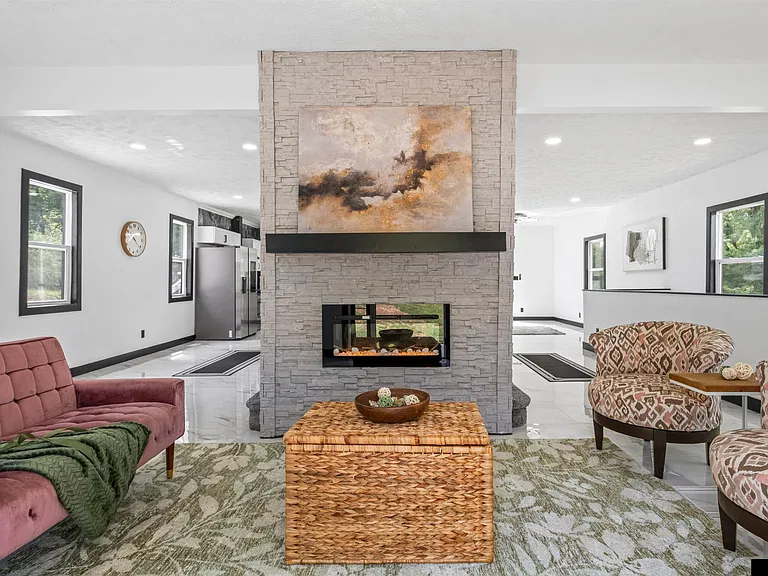
Related Articles
 Revenue Optimization
What Is RevPAR? Why It Beats Occupancy for STR Investors
RevPAR reveals how efficiently a short-term rental monetizes its available nights. Learn the formula, see a real example, and see why it beats occupancy alone.
 Property Management
Red Flags It's Time to Fire Your Property Manager
Wondering if it's time to switch property managers? Learn the real red flags vs. a bad month - plus how Omaha owners can evaluate a change.
 Investment Strategy
Airbnb Investment Strategy: A 2026 Step-by-Step Guide
Learn how to build a disciplined Airbnb investment strategy in 2026 - market selection, underwriting, financing, risk, and portfolio scaling, explained.