
How Much Does It Cost to Start an Airbnb?
Editorial & Financial Disclaimer
All figures are 2026 U.S. estimates and are illustrative, not financial advice. Actual costs vary by market. The case study is hypothetical and constructed for educational purposes only. Review every 6 months for cost, fee, regulatory, and market data changes.
Quick Answer
Starting an Airbnb typically costs $10,000 to $60,000 in setup capital if you already own or are leasing the property, or $100,000 to $500,000+ in total cash invested if you're also purchasing the property. There is no single "cost to start an Airbnb" — the figure depends almost entirely on whether you're furnishing a property you already own, buying a property specifically for short-term rental use, or leasing a property through rental arbitrage.
The major cost categories that make up an Airbnb launch budget are:
- Property acquisition / down payment (if purchasing) — typically 15%–25% of purchase price for an investment property loan in 2026
- Security deposit and first/last month's rent (if pursuing rental arbitrage)
- Furnishing — the single largest line item in most setups, typically $8,000–$50,000+
- Décor and guest-experience items (art, lighting, styling)
- Kitchen and household essentials (cookware, small appliances, tools)
- Linens (sheets, towels, robes — usually 2–3 sets per bed)
- Technology and smart locks (keyless entry, noise sensors, Wi-Fi, streaming)
- Photography — professional listing photos, typically $150–$700
- Initial deep cleaning and turnover setup
- Airbnb/platform-related costs (host service fee, payout setup)
- Licenses and permits — ranges from under $100 to over $1,500 depending on jurisdiction
- Insurance — dedicated short-term rental coverage, typically $1,000–$4,000/year
- Initial operating supplies (toiletries, paper goods, starter pantry items)
- Professional setup or management onboarding (optional)
- Contingency / working-capital reserve (recommended: 3–6 months of expenses)
Do not treat "cost to start an Airbnb" as one universal number. Five very different investors are asking this question, and each has a different answer:
A. Starting an Airbnb in a property you already own. Cash needed is limited to furnishing, setup, permits, and reserves — typically $10,000–$40,000.
B. Buying a property specifically for Airbnb use. Cash needed includes the down payment and closing costs on top of setup capital — typically $100,000–$500,000+, driven primarily by local property values.
C. Airbnb rental arbitrage (leasing a property to sublease as an STR). Cash needed covers security deposit, first month's rent, and furnishing — typically $15,000–$45,000, with no property equity created.
D. A low-budget, lean setup. Studio or one-bedroom, budget furnishings, DIY photography and listing work — as low as $8,000–$15,000.
E. A premium or high-end short-term rental. Multi-bedroom property, designer furnishing, hot tub or pool, professional design services — commonly $50,000–$100,000+ in setup capital alone, before any acquisition cost.
The acquisition path — own, buy, or lease — changes total capital requirements more than any other variable in this decision. All figures in this article are 2026 U.S. estimates and are clearly labeled as such throughout; actual costs vary meaningfully by market.
Investors evaluating a specific property should also review current listings on the Roam Investor Portal to compare acquisition costs against the setup estimates below.
- Furnishing$22,000
- Acquisition (Down Payment + Closing)$87,400
- Working Capital Reserve$12,000
- Insurance$2,200
- Technology & Photography$3,100
- Permits & Licenses$600
- Initial Supplies$1,500
Why Airbnb Startup Costs Are Consistently Underestimated
Most first-time Airbnb investors anchor their budget on furniture and stop there. That is the most common — and most expensive — planning mistake in short-term rental investing. Furnishing is usually the largest single line item, but it is rarely more than half of the total cash an investor actually needs before the property can accept its first booking.
A more accurate framework separates four distinct pools of capital:
- Startup costs — one-time expenses to make the unit guest-ready (furnishing, technology, photography, initial supplies).
- Operating reserves — cash held back to cover months with low occupancy, unexpected repairs, or slow ramp-up periods.
- Acquisition costs — down payment, closing costs, inspection, appraisal, and title fees, if the property is being purchased.
- Financing costs — origination fees, points, and any lender-required reserves, if the property is financed.
The right question for an investor is not "how much does it cost to start an Airbnb?" in isolation. It is: "What is the total initial cash required before this specific property generates its first dollar of positive cash flow — and does the expected return justify that capital?" Underwriting an Airbnb like a business, rather than a furniture-shopping project, is what separates investors who hit their return targets from those who run out of working capital in month four.
Executive Summary
- Setup-only startup costs (property already owned or leased) typically run $10,000–$60,000, driven mainly by furnishing quality and property size.
- Full acquisition-plus-setup costs (buying a property for Airbnb) typically run $100,000–$500,000+, driven primarily by down payment size and local real estate values.
- Furnishing is the largest recurring surprise in most startup budgets — investors who budget $5,000 commonly end up spending $15,000 or more.
- Rental arbitrage lowers upfront capital relative to ownership but creates no equity and carries lease-dependent risk.
- Investment property mortgage rates in 2026 run roughly 0.5–1.0 percentage points above primary-residence rates, with typical down payments of 15%–25%.
- Licenses, permits, and insurance vary enormously by city — from under $200 in some markets to $1,500+ in others — and must be confirmed locally before underwriting a property.
- A 3–6 month operating reserve is not optional. Occupancy ramps gradually in most markets, and skipping this reserve is one of the most common reasons new listings run into cash-flow trouble in year one.
Table of Contents
- Airbnb Startup Cost Breakdown by Category
- Cost of Starting an Airbnb in a Property You Already Own
- Cost of Buying a Property Specifically for Airbnb
- Cost of Airbnb Rental Arbitrage
- Furnishing Costs, Room by Room
- Technology, Photography, and Listing Setup
- Licenses, Permits, and Insurance
- Operating Reserves and Working Capital
- Three Startup Budget Scenarios
- Own vs. Rental Arbitrage: Investor Comparison
- How Startup Costs Affect ROI
- Investor Case Study: A $380,000 Airbnb Purchase
- Common Mistakes When Starting an Airbnb
- Airbnb Startup Cost Checklist
- Frequently Asked Questions
- Conclusion
Airbnb Startup Cost Breakdown by Category
The table below summarizes typical 2026 cost ranges for each startup category. These figures assume a mid-sized U.S. property (roughly 2 bedrooms) and exclude acquisition costs, which are covered separately below.
| Cost Category | Typical Cost Range | Notes |
|---|---|---|
| Furnishing (whole property) | $8,000 – $40,000+ | One-time. Scales with bedroom count and quality tier. |
| Kitchen and household essentials | $800 – $3,000 | One-time. Often bundled into furnishing budgets. |
| Linens (2–3 sets per bed) | $300 – $1,500 | One-time; recurring replacement every 1–2 years. |
| Technology / smart locks | $500 – $2,500 | One-time hardware; some items (Wi-Fi, streaming) recur monthly. |
| Photography | $150 – $700 | One-time per listing refresh. |
| Initial deep cleaning | $150 – $500 | One-time pre-launch service. |
| Licenses and permits | $75 – $1,500+ | Market-dependent; some cities charge under $200, others over $1,000. |
| Insurance (annual) | $1,000 – $4,000 | Recurring. Standard homeowners policies typically exclude STR activity. |
| Initial operating supplies | $300 – $1,200 | One-time stock; recurring restocking thereafter. |
| Professional setup / co-hosting onboarding | $0 – $2,000 | Optional. Some managers waive onboarding fees. |
| Working-capital reserve | 3–6 months of expenses | Recommended, not a hard requirement — see reserve section below. |
All figures are estimated market-dependent ranges, not fixed prices. Local labor costs, property size, and design tier are the primary drivers of variance.
Down Payment & Closing Costs
Acquisition capital
Furnishing & Setup
Make it guest-ready
Reserves
3–6 months buffer
Operations
Generate returns
Cost of Starting an Airbnb in a Property You Already Own
This is the lowest-capital path into short-term rental hosting because acquisition cost is already sunk or irrelevant to the decision. Total cash required is generally $10,000–$40,000, composed almost entirely of furnishing, technology, permits, insurance, and reserves.
Investors converting an existing property (a former primary residence, an inherited property, or an underperforming long-term rental) should still budget for:
- A full furnishing upgrade if the property isn't already guest-ready
- STR-specific insurance, since a standard homeowners or landlord policy typically will not cover short-term guest activity
- Local permit or registration fees, which apply even to properties the owner has held for years
- A working-capital reserve, since converting a property doesn't guarantee immediate occupancy
Cost of Buying a Property Specifically for Airbnb
This path requires the most total capital because it layers acquisition costs on top of setup costs. As of August 2026, 30-year fixed mortgage rates for primary residences have been running in the mid-6% range, with investment property rates typically running 0.5 to 1.0 percentage points higher due to lender risk pricing. Down payment requirements for investment properties commonly range from 15% to 25%, depending on loan type, credit profile, and lender.
Total cash required for a purchase generally includes:
- Down payment (15%–25% of purchase price)
- Closing costs (typically 2%–5% of purchase price)
- Full furnishing and setup budget
- Insurance, permits, and licensing
- A working-capital reserve
Formula
Total Cash to Launch = Down Payment + Closing Costs + Furnishing + Setup Costs + Permits/Insurance + Working Capital Reserve
Because down payment scales directly with purchase price, market selection is often the single biggest lever an investor has over total startup capital. A $250,000 property and a $650,000 property in different markets can require dramatically different total cash outlays even with identical furnishing budgets.
Cost of Airbnb Rental Arbitrage
Rental arbitrage means leasing a property from a landlord (with permission to sublease short-term) rather than purchasing it. This lowers the acquisition barrier significantly but does not eliminate upfront capital — it shifts it toward lease-related costs.
Typical arbitrage startup costs include:
- Security deposit (commonly one to two months' rent)
- First and last month's rent
- Full furnishing budget, since arbitrage units typically start unfurnished or minimally furnished
- Insurance, permits, and technology setup
Total cash required for rental arbitrage typically runs $15,000–$45,000, depending on rent level and furnishing tier. Arbitrage does not build equity and depends entirely on the underlying lease and the landlord's continued permission to sublease — a risk factor that ownership does not carry.
Furnishing Costs, Room by Room
Furnishing is consistently the largest line item in an Airbnb startup budget, and the category where new hosts most often underestimate spend. Based on 2026 furnishing-industry data, typical ranges by property size are:
| Property Size | Budget Tier | Mid-Range Tier | Premium Tier |
|---|---|---|---|
| Studio | $5,000 – $10,000 | $10,000 – $15,000 | $15,000+ |
| 1 bedroom | $8,000 – $15,000 | $12,000 – $18,000 | $18,000 – $30,000 |
| 2 bedroom | $12,000 – $20,000 | $15,000 – $28,000 | $28,000 – $40,000 |
| 3 bedroom | $18,000 – $30,000 | $22,000 – $35,000 | $35,000 – $55,000+ |
| 4+ bedroom | $25,000 – $40,000 | $30,000 – $50,000 | $50,000+ |
Each additional bedroom typically adds $2,500–$6,000 depending on quality tier, and each additional living area, patio, or entertainment space typically adds $3,000–$8,000.
Bedroom-by-bedroom considerations:
- Bed and mattress: the single highest-scrutiny item in guest reviews; budget quality over minimum cost here.
- Nightstands, lamps, and blackout curtains: small-ticket items that materially affect guest comfort ratings.
- Linens: budget 2–3 full sets per bed to support back-to-back turnovers without same-day laundry dependency.
- Storage: guests staying multiple nights expect usable dresser or closet space.
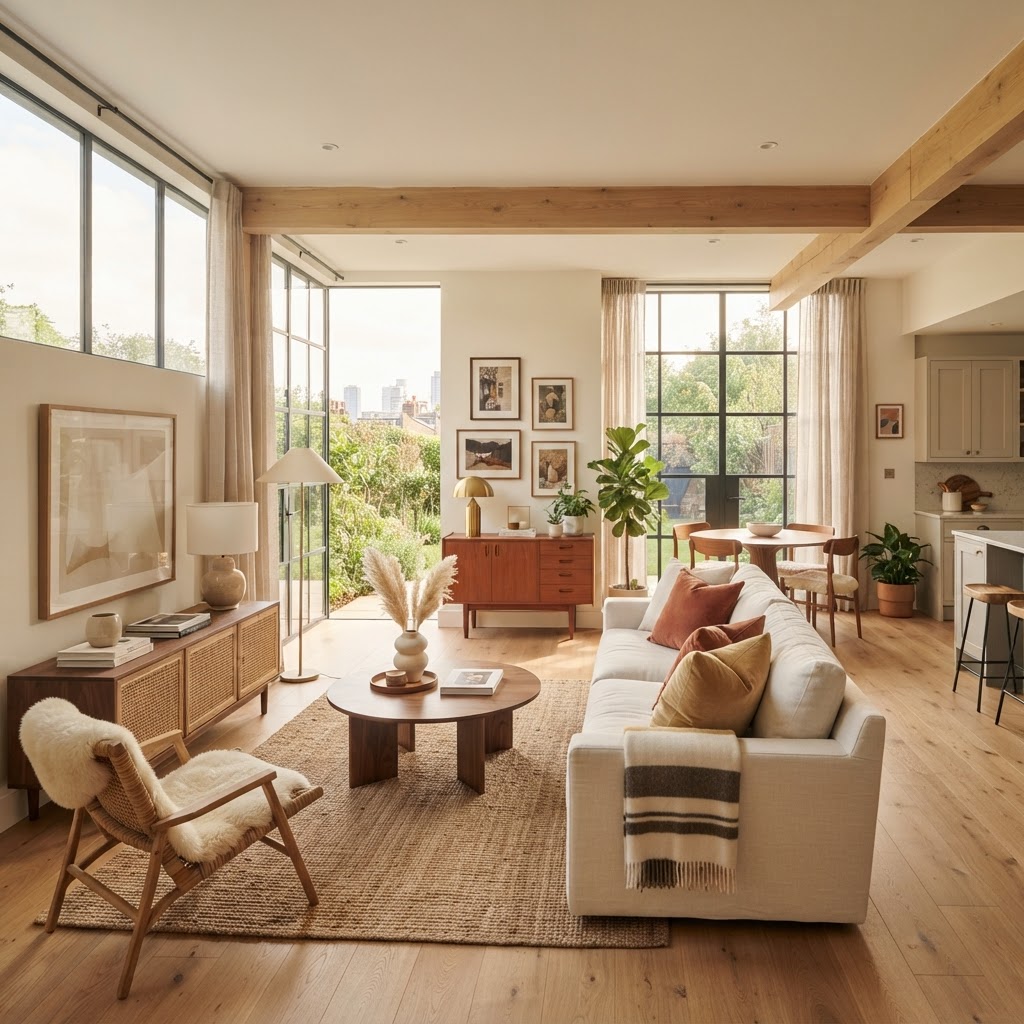
Kitchen and household essentials typically add $800–$3,000, covering cookware, small appliances (coffee maker, toaster), dishware for the maximum listed occupancy, and basic tools. Décor and guest-experience items — art, mirrors, plants, and styling accents — are usually folded into the overall furnishing budget but deserve a specific allocation, since bare walls and empty surfaces are a common source of negative reviews.
A useful industry rule of thumb: budget 8%–12% of expected first-year gross revenue toward furnishing. This keeps the furnishing spend proportional to the property's actual earning potential rather than an arbitrary fixed number.
Technology, Photography, and Listing Setup
Smart-home and technology setup typically costs $500–$2,500 one-time, covering:
- Smart lock or keyless entry system
- Noise/occupancy sensors (often required or recommended for permit compliance)
- Wi-Fi router upgrade for guest-grade bandwidth
- Streaming service subscriptions (a small recurring cost)
Photography is one of the highest-leverage, lowest-cost line items in the entire budget, typically $150–$700 for a professional shoot. Listings with professional photography consistently outperform amateur-photographed listings in click-through and booking conversion, making this one of the few startup expenses with a well-documented direct link to occupancy.
Initial deep cleaning before the first guest arrives typically costs $150–$500, separate from the recurring per-turnover cleaning fee that is usually passed through to guests.
Licenses, Permits, and Insurance
Permits and licenses vary enormously by jurisdiction — this is not a category where a single national number is meaningful. 2026 examples illustrate the range:
- Some cities charge $75–$300 for a basic short-term rental registration or business license.
- Mid-tier cities commonly charge $150–$600 per year or per two-year cycle.
- High-regulation markets can charge $1,000–$1,500+, sometimes including application fees, inspection fees, and neighbor-notification fees.
- Some markets (including parts of New York City) effectively restrict or prohibit non-owner-occupied whole-home short-term rentals altogether, regardless of fee.
Because of this variance, investors must confirm current permit requirements and fees directly with the specific city or county before underwriting a property — never assume permit costs from one market apply to another.
Permit & Insurance Cost Variability
Low-Cost Markets
$75 – $300
- • Basic STR registration
- • Smaller cities
- • Lower regulation
Mid-Tier Markets
$150 – $600
- • Annual or biennial renewal
- • Mid-size cities
- • Moderate regulation
High-Regulation Markets
$1,000 – $1,500+
- • Application + inspection fees
- • Neighbor-notification fees
- • Major metros
Illustrative ranges only. Permit and insurance costs are market-dependent — confirm current requirements directly with the specific city or county before underwriting a property.
Insurance is a required, non-negotiable startup cost. A standard homeowners insurance policy typically excludes short-term rental activity, and Airbnb's built-in host protection programs are not a substitute for a dedicated policy — they are supplemental and have coverage limits and exclusions. Dedicated short-term rental insurance in 2026 typically costs $1,000–$4,000 per year, depending on property value, location, and coverage limits. Many jurisdictions that require STR permits also require proof of liability insurance, commonly in the $500,000–$1,000,000 range, as a condition of licensing.
Operating Reserves and Working Capital
A working-capital reserve is the most frequently skipped line item in first-time Airbnb budgets — and one of the most consequential. New listings rarely reach stabilized occupancy in month one. Seasonal markets can see occupancy swings of 20–40 percentage points between peak and shoulder season.
Recommended Reserve
3–6 months of total property expenses
Including mortgage payment (if financed), insurance, utilities, and maintenance. This reserve exists to cover the ramp-up period and any unplanned repair, not to fund ongoing operations indefinitely.
Three Startup Budget Scenarios
These scenarios illustrate setup capital only (furnishing through working capital) for a property that is already owned or leased. They exclude down payment and closing costs, which are addressed separately in the case study below. All figures are illustrative estimates, not guaranteed costs.
Budget Scenario 1 — Lean Airbnb Setup
Assumption: 1-bedroom property, budget-tier furnishing, owner-managed.
| Furnishing | $9,000 |
| Technology | $600 |
| Photography | $300 |
| Initial supplies | $600 |
| Permits/licenses | $300 |
| Insurance (annual) | $1,200 |
| Working capital reserve | $3,000 |
| Total estimated startup cost | $15,000 |
Budget Scenario 2 — Professional Mid-Market Setup
Assumption: 2-bedroom property, mid-tier furnishing, light professional support.
| Furnishing | $18,000 |
| Technology | $1,500 |
| Photography | $500 |
| Initial supplies | $1,000 |
| Permits/licenses | $600 |
| Insurance (annual) | $2,000 |
| Working capital reserve | $8,000 |
| Total estimated startup cost | $31,600 |
Budget Scenario 3 — Premium Airbnb Setup
Assumption: 3–4 bedroom property, premium/designer furnishing, professional photography and management onboarding.
| Furnishing | $38,000 |
| Technology | $3,000 |
| Photography | $900 |
| Initial supplies | $2,000 |
| Permits/licenses | $1,000 |
| Insurance (annual) | $3,200 |
| Working capital reserve | $15,000 |
| Total estimated startup cost | $63,100 |
Setup Capital Comparison
Own vs. Rental Arbitrage: Investor Comparison
| Factor | Own Property | Rental Arbitrage |
|---|---|---|
| Upfront capital | Highest — includes down payment and closing costs | Lower — limited to deposit, rent, and furnishing |
| Down payment | 15%–25% of purchase price typical in 2026 | None; security deposit and rent in lieu |
| Monthly fixed cost | Mortgage, property tax, insurance | Lease payment, insurance |
| Furnishing | Same requirement as arbitrage | Same requirement as ownership |
| Risk | Market/property risk; owner controls the asset | Lease-dependent; landlord can revoke sublease permission |
| Scalability | Slower — each property requires new financing | Faster — no mortgage qualification per unit |
| Equity creation | Yes — investor builds ownership equity over time | No — no equity is created |
| Regulatory considerations | Owner is directly responsible for compliance | Both landlord and tenant-operator may face compliance exposure |
Own Property
Build equity, more control
- Upfront CapitalHighest
- Equity CreationYes
- ScalabilitySlower
- Risk ProfileMarket/property
- Monthly Fixed CostMortgage + tax
Rental Arbitrage
Lower barrier, no equity
- Upfront CapitalLower
- Equity CreationNo
- ScalabilityFaster
- Risk ProfileLease-dependent
- Monthly Fixed CostLease + insurance
Neither model is universally superior. Ownership builds equity and offers more control but requires substantially more capital and financing qualification. Arbitrage lowers the capital bar and can scale faster across multiple units, but it carries lease-dependency risk and produces no long-term asset appreciation for the operator.
How Startup Costs Affect ROI
Startup cost is not a separate consideration from return on investment — it is the denominator of the most important return metric in short-term rental investing.
Total Cash Invested = Down Payment + Closing Costs + Furnishing + Setup + Initial Reserves + Other Startup Costs
Cash-on-Cash Return = Annual Pre-Tax Cash Flow ÷ Total Cash Invested
An investor who underestimates startup cost overstates their eventual cash-on-cash return, because the denominator in that formula is too small. This is one of the most common underwriting errors in short-term rental investing: modeling projected revenue carefully while treating startup capital as an afterthought.
Startup cost also directly affects two other metrics investors should track before purchasing:
- Payback period — the time required for cumulative cash flow to equal total cash invested. A larger startup budget extends payback period unless it also drives higher nightly rates or occupancy.
- Break-even occupancy — the minimum occupancy rate required to cover all fixed and variable costs, including debt service. Higher fixed costs (larger mortgage, higher-tier furnishing financed through a loan) raise the break-even threshold.
Revenue is not profit. An Airbnb generating $60,000 in gross annual revenue with $45,000 in combined operating expenses and debt service produces very different investor outcomes than the same $60,000 in revenue against $30,000 in costs. Startup cost decisions — particularly financing choices and furnishing-tier decisions — flow directly into that expense structure for years, not just at launch.
Investor Case Study: A $380,000 Airbnb Purchase
Illustrative example — not a guarantee of future performance. All figures below are hypothetical and constructed for educational purposes only.
Assumptions:
| Purchase price | $380,000 |
| Down payment (20%) | $76,000 |
| Loan amount | $304,000 |
| Illustrative interest rate (30-year fixed, investment property) | 7.5% |
| Closing costs (3% of purchase price) | $11,400 |
| Furnishing | $22,000 |
| Technology setup | $2,500 |
| Photography | $600 |
| Initial supplies | $1,500 |
| Permits/licenses | $600 |
| First-year insurance | $2,200 |
| Working capital reserve | $12,000 |
| Total cash invested | $128,800 |
$128,800 Total Cash Invested
Projected first-year operations (illustrative):
| Average daily rate (ADR) | $235 |
| Occupancy | 62% (≈226 booked nights) |
| Gross annual revenue | $53,100 |
| Property management fee (20% of revenue) | $10,620 |
| Airbnb host service fee (3% of revenue) | $1,593 |
| Property tax (1.2% of value) | $4,560 |
| Insurance | $2,200 |
| Utilities | $3,600 |
| Maintenance/repairs | $2,500 |
| Supplies restocking | $1,200 |
| Total operating expenses (excl. debt service) | $26,273 |
| Net Operating Income (NOI) | $26,827 |
| Annual mortgage debt service (P&I) | $25,512 |
| Annual pre-tax cash flow | $1,315 |
| Cash-on-cash return | ≈1.0% |
What this case study illustrates: with a realistic 20% down payment and mid-market ADR and occupancy assumptions, this property generates only a modest first-year cash-on-cash return once the full $128,800 in total cash invested — not just the down payment — is used as the denominator. This is a common and important pattern for investors to understand: a property can be operationally profitable (positive NOI) while still producing a thin cash-on-cash return once financing costs and full startup capital are properly accounted for. Investors should stress-test occupancy and ADR assumptions before committing capital, and should compare any specific opportunity against current listings on the Roam Investor Portal.
Sensitivity Analysis
Cash-on-cash return (%) across occupancy and ADR scenarios for the $380,000 case study
| ADR ↓ / Occupancy → | 50% | 55% | 60% | 65% | 70% | 75% | |
|---|---|---|---|---|---|---|---|
| $180–$280 | -11.1% | -8.9% | -6.7% | -5.1% | -3.4% | -1.3% | -0.2% |
| $180–$280 | -9.1% | -6.7% | -4.3% | -2.5% | -0.7% | 1.7% | 2.9% |
| $180–$280 | -7.2% | -4.5% | -1.9% | 0.0% | 2.0% | 4.6% | 5.9% |
| $180–$280 | -5.2% | -2.4% | 0.5% | 2.6% | 4.7% | 7.6% | 9.0% |
| $180–$280 | -3.2% | -0.2% | 2.9% | 5.2% | 7.5% | 10.5% | 12.0% |
| $180–$280 | -1.3% | 2.0% | 5.3% | 7.7% | 10.2% | 13.5% | 15.1% |
Common Mistakes When Starting an Airbnb
- Budgeting only for furniture and treating every other category as an afterthought.
- Ignoring closing costs when underwriting a purchase, which can add 2%–5% of purchase price in cash that's easy to miss in early planning.
- Forgetting permits and licenses, or assuming a neighboring city's rules and fees apply locally.
- Underestimating insurance, or assuming a standard homeowners policy covers short-term rental activity — it typically does not.
- Skipping the operating reserve and assuming full occupancy from month one.
- Buying furniture before defining the target guest, resulting in a mismatch between design tier and the ADR the market will actually support.
- Underestimating ongoing maintenance, which rises with guest turnover frequency compared to long-term tenancy.
- Ignoring local STR regulations until after purchasing, rather than confirming legality and licensing feasibility before closing.
- Assuming occupancy will be high immediately, rather than modeling a realistic ramp-up period for a new listing with no reviews.
- Calculating ROI using only the down payment instead of total cash invested, which inflates the apparent cash-on-cash return.
Airbnb Startup Cost Checklist
Your Progress
0/16Frequently Asked Questions
Conclusion
There is no universal answer to "how much does it cost to start an Airbnb?" — the number depends on whether an investor is converting a property they already own, purchasing a property specifically for short-term rental use, or pursuing rental arbitrage, and it depends heavily on local furnishing costs, permit fees, insurance rates, and financing terms.
The question worth underwriting is not the generic startup-cost figure — it's: how much total cash will this specific property require before it becomes operational, and what return can that capital reasonably generate? That question connects startup cost directly to underwriting discipline: total cash invested, projected occupancy and ADR, operating expenses, debt service, and the resulting cash-on-cash return. Investors who model all of these together — rather than treating furnishing as the whole budget — are the ones who can accurately compare one opportunity against another.
Investors evaluating specific short-term rental opportunities can review current inventory and property-level financials on the Roam Investor Portal.
Ready to Invest?
Explore professionally managed investment opportunities with Roam Properties.
Stay Ahead of the Market
Receive expert Airbnb investing insights, ROI strategies, and market updates directly in your inbox.
Join hundreds of investors receiving market insights.